Roof Shingle Repair in Greenville, SC
Shingles are the part of the roof everyone can see, so they get blamed for most leaks. Sometimes they deserve it. The useful question is whether you have a localised failure worth repairing or a covering that has reached the end of its life.
Greenville SC Roofing Pros connects you with an independent local roofing contractor. We do not carry out roofing work ourselves.
When can shingles be repaired instead of replaced?
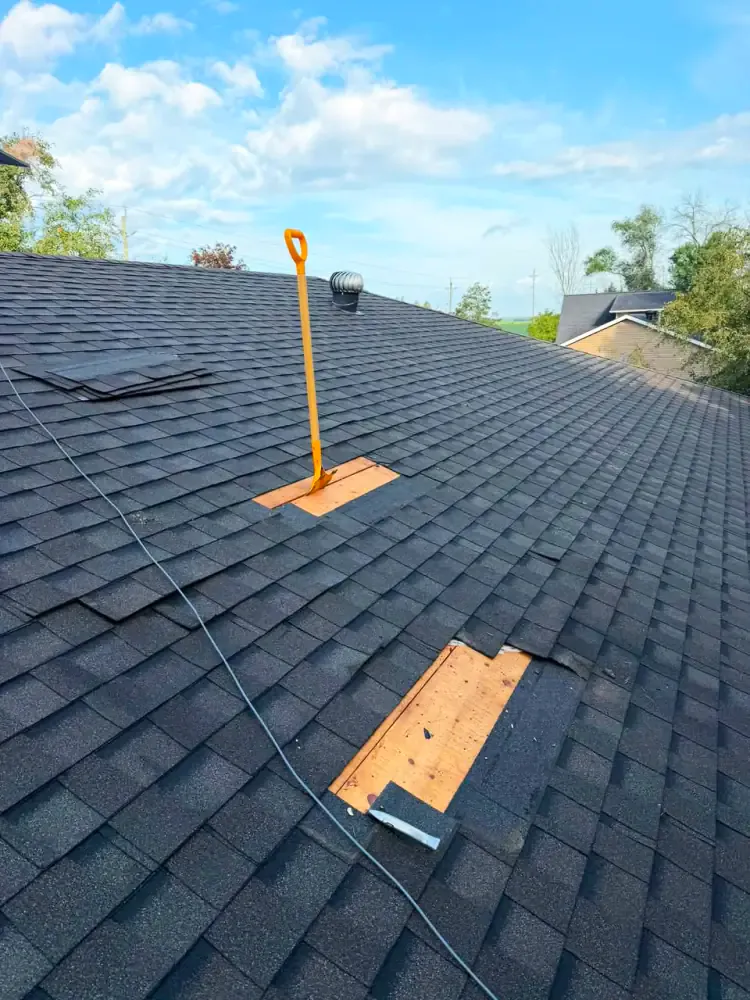
Repair is the sensible choice when the damage is localised and the rest of the covering is still in good condition — a few shingles blown off in a storm, a cracked tab, a creased section along a ridge, a handful of nail pops. The roof is doing its job everywhere else, and there is no reason to replace it.
Replacement becomes the better answer when the whole covering is failing at once. The signals are consistent: granules collecting in the gutters across the whole roof, shingles that are brittle and crack when lifted, widespread curling or cupping, bald patches where the asphalt mat is exposed, and leaks appearing in several unrelated places in the same season. At that point, each repair buys a few months and the next failure is already forming somewhere else.
The matching problem
Even when a repair is technically right, colour matching may not be possible. Shingle colours are discontinued, and the existing roof has weathered and lost granules, so new shingles rarely blend on an older roof. On a rear slope this is cosmetic. On a prominent front elevation it is worth discussing before work starts, not after.
How shingles fail, and what each failure means
| What you see | Likely cause | What it means |
|---|---|---|
| Missing shingles or tabs | Wind, usually with a broken seal strip beforehand | Straightforward repair, but check the surrounding area — wind rarely damages only what it removed |
| Horizontal crease across shingles | Wind lifted and folded them back, then dropped them | Functionally damaged even though nothing is missing. The crease is a future leak |
| Lifted or unsealed tabs | Broken self-seal strip, common after high wind | Shingles sit flat and look fine but are no longer bonded. Wind-driven rain gets underneath |
| Curling or cupping edges | Age, heat, or inadequate attic ventilation | A whole-roof signal rather than a local one |
| Cracked or split shingles | Thermal movement and age; sometimes impact | Repair if isolated; a whole-roof signal if widespread |
| Granule loss / bald patches | Age, hail bruising, abrasion from overhanging branches | Granules protect the asphalt from UV. Once they are gone, that area degrades quickly |
| Nail pops | Deck movement pushing fasteners up through the shingle above | Each pop is a hole. Easily repaired, but often a sign the deck is moving |
| Dark streaking | Algae, common on shaded north-facing slopes | Mostly cosmetic, but it indicates a slope that stays damp and will age faster |
| Moss growth | Persistent damp and shade | Holds water against the covering and lifts shingle edges as it thickens |
What a proper shingle repair involves
Replacing a shingle correctly is more involved than it looks, because each shingle is nailed through the one below and sealed to the one above.
- Breaking the seal above.
The courses above have to be carefully lifted without cracking them — which is why repairs on a brittle old roof often cause more damage than they fix, and why contractors are cautious about them in cold weather.
- Removing the fasteners.
Including the nails from the course above that pass through the damaged shingle.
- Checking the deck and underlayment.
If water has been getting in, this is the moment the rot is discovered. Soft sheathing has to be cut out and replaced.
- Fitting the new shingle.
Correctly aligned, nailed in the manufacturer's nailing zone — too high and it holds nothing, too low and the nails are exposed.
- Re-sealing.
Hand-sealing the tabs that were lifted. In cool weather the factory adhesive will not activate on its own, so this step is not optional.
Why DIY shingle repairs usually fail
The two most common mistakes are nailing in the wrong place and sealing the wrong edges. Running a bead of mastic along the bottom edge of a shingle traps water underneath instead of letting it drain. Add the fall risk on a pitched roof and this is not a job we would encourage anyone to attempt.
Shingle roofs in Greenville
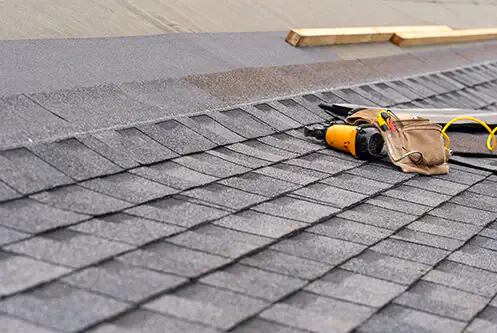
Asphalt shingle is by far the most common roof covering across Greenville County, and local conditions shape how it ages.
Heat and humidity drive the ageing of the asphalt itself, and attic ventilation matters enormously — an under-ventilated attic in an Upstate summer cooks the covering from underneath and shortens its life measurably. Shaded north slopes have the opposite problem: they stay damp, grow algae and moss, and lose granules faster than the sunny side of the same roof. It is entirely normal here for one slope of a roof to be noticeably older-looking than another.
Wind is the acute threat. Severe thunderstorm warnings for the Greenville area commonly reference gusts around 60 mph, which is enough to break seal strips and crease shingles without removing them. That is why a roof that looks untouched after a storm can start leaking weeks later — covered in more detail on our storm damage page.
Age clusters by neighbourhood, which is the single most useful thing to know when budgeting. Homes built through the 1960s to 1990s across the east side — Spring Forest, Foxcroft, Gower Estates — tend to be on their second or third covering now, and neighbours often need work within a few years of each other. Newer builds in Half Mile Lake and Spaulding Farm are generally earlier in that cycle, where repairs genuinely are repairs. For either, the starting point is the same: local roof leak repair in Greenville.
Shingle repair and the rest of the roof
It is worth saying plainly that most roofs do not leak through the field of the shingles. They leak at the details. If a contractor has replaced a few shingles and the leak continues, the likely explanation is that the shingles were not the cause.
The usual suspects sit around the edges of the shingle field: flashing at chimneys and walls, valleys clogged with debris, split pipe boots, skylight flashing kits, and the junctions where a low-slope porch roof meets the main pitch. Replacing shingles near those details without correcting the detail itself is the most common unnecessary repair in residential roofing.
So if you are being quoted for shingle work on a roof that is leaking, a fair question is: “how do you know the shingles are what is letting the water in?” A good contractor will have an answer backed by what they found in the attic. If they do not, consider a dedicated leak detection visit first.
Shingle repair questions
How many shingles can be replaced before I should just replace the roof?
There is no fixed number — condition matters more than count. Twenty shingles replaced on a six-year-old roof after a storm is a repair. Five shingles on a twenty-year-old roof where the rest crack when you lift them is money spent delaying the inevitable. Ask the contractor what happened to the surrounding shingles when they lifted them; brittleness is the real test.
Will new shingles match my existing roof?
Rarely exactly. Colours get discontinued, and an existing roof has weathered and lost granules, so new material tends to look obviously newer. On a rear slope it is cosmetic. On a visible front elevation, discuss it before the work rather than after.
Can shingles be repaired in winter?
Yes, with care. Cold shingles are brittle and crack when lifted, and the factory sealant does not activate below a certain temperature, so tabs have to be hand-sealed. It is routine work for an experienced contractor, but it is slower and the risk of collateral damage is higher than in mild weather.
What is a nail pop and does it cause leaks?
A nail pop is a fastener that has worked its way up through the shingle above, usually because the deck underneath has moved. It creates a small raised bump and, eventually, a hole. Individually minor and easy to repair, but a roof with many of them is telling you something about the deck.
Do I need to remove moss and algae from my roof?
Algae streaking is largely cosmetic. Moss is not — it holds moisture against the covering and lifts shingle edges as it grows thicker. It should be removed, but gently. Pressure washing an asphalt shingle roof strips the granules and does far more harm than the moss was doing.
Why do only some slopes of my roof look worn out?
Entirely normal. South and west-facing slopes take more direct sun and age faster through heat and UV. North-facing slopes stay shaded and damp, grow algae and moss, and degrade through moisture instead. Heavy tree cover over one side of the house accentuates both effects.
Shingles missing or damaged?
Find out whether you need a repair or a replacement. Call to be connected with a Greenville roofing contractor.
Calls may be routed to a participating contractor and we may be compensated for the referral.
Other roof leak services
Shingle damage frequently sits alongside these other issues.
Emergency Roof Leak Repair
Water coming in right now? Emergency tarping, dry-in and same-visit stabilisation to stop the damage spreading.
Read moreStorm Damage Roof Leak Repair
Leaks that started after wind, hail or a summer thunderstorm — including documentation for an insurance claim.
Read moreRoof Leak Detection
Finding where water actually gets in, which is rarely directly above the stain on your ceiling.
Read moreChimney & Flashing Leak Repair
Step flashing, counter-flashing, crickets and chimney crowns — the single most common source of roof leaks.
Read moreFlat & Low-Slope Roof Leak Repair
Ponding water, split seams and failed penetrations on TPO, EPDM and modified bitumen low-slope roofs.
Read moreSkylight Leak Repair
Failed seals, cracked curbs and bad flashing kits — plus telling a real leak apart from condensation.
Read moreRoof Valley Leak Repair
Where two roof planes meet, water concentrates and debris dams it back under the shingles.
Read moreCommercial Roof Leak Repair
Low-slope commercial roofs, HVAC curbs, drains and the licensing rules that differ from residential work.
Read more